
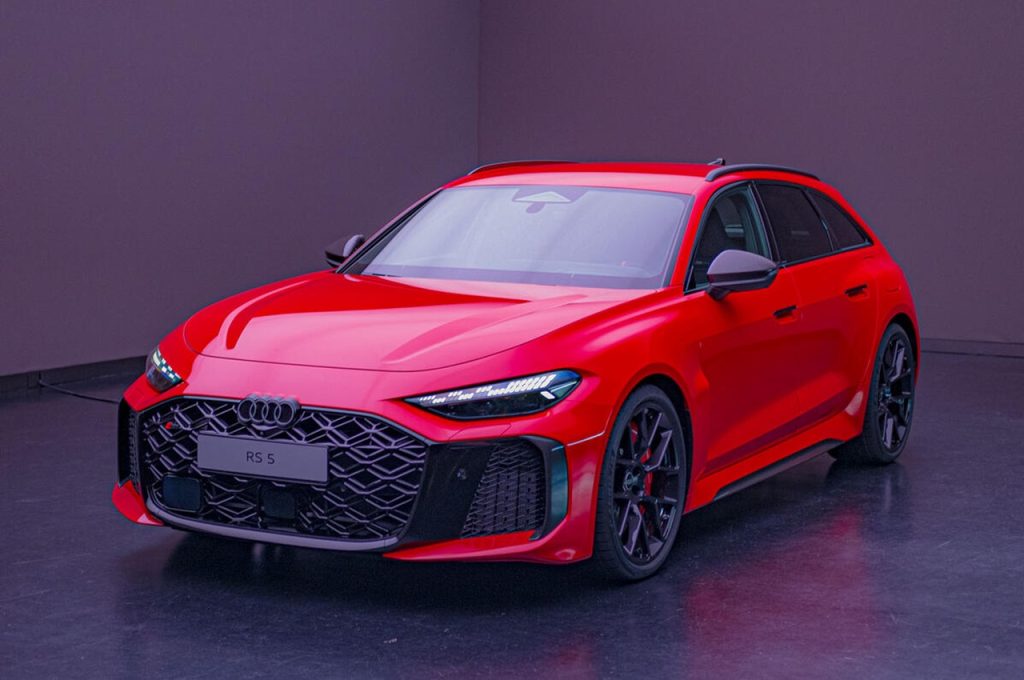
With great power comes greater torque-vectoring tech to handle the weight, such is the case with the all-new 2026 Audi RS5 that is a remnant of its now-scrapped plan to distinguish internal combustion and EV models with odd and even designations. Nonetheless, the new mid-sized performance model will arrive in wagon and fastback body styles.
Sticking with the current RS4 powertrain comprising a twin-turbocharged 2.9-litre V6, the RS5 matches it with a 22kWh battery pack, and a 174 PS electric motor mounted on the transmission to achieve the quoted figures.
The crazy Audi engineers increased fuel injector pressure and paired them with new variable-geometry turbos that are water-cooled to reduce intake temperatures, resulting in improved response.
You may also be interested: Audi Introduces New V6 Diesel with Expanded Electrification for Q5 and A6
All in, it adds up to 39 PS for a total of 510 PS from the petrol engine alone, that coupled with the V6 churns out a total of 630 PS, a massive 166 PS jump.
It is mated to an eight-speed automatic again that links to the Quattro all-wheel drive for a supercar century sprint of 3.6 seconds and a top speed of 285 kph, the latter reduced negligibly.
Audi has said that the addition of the electric motor does deliver a significant performance boost over the previous RS4. Real-world performance figures are derived from a rolling drag race versus the previous RS4 Competition, where the new RS5 gapped it by two car lengths within 2.5 seconds, courtesy of the instantaneous torque from the electric motor.
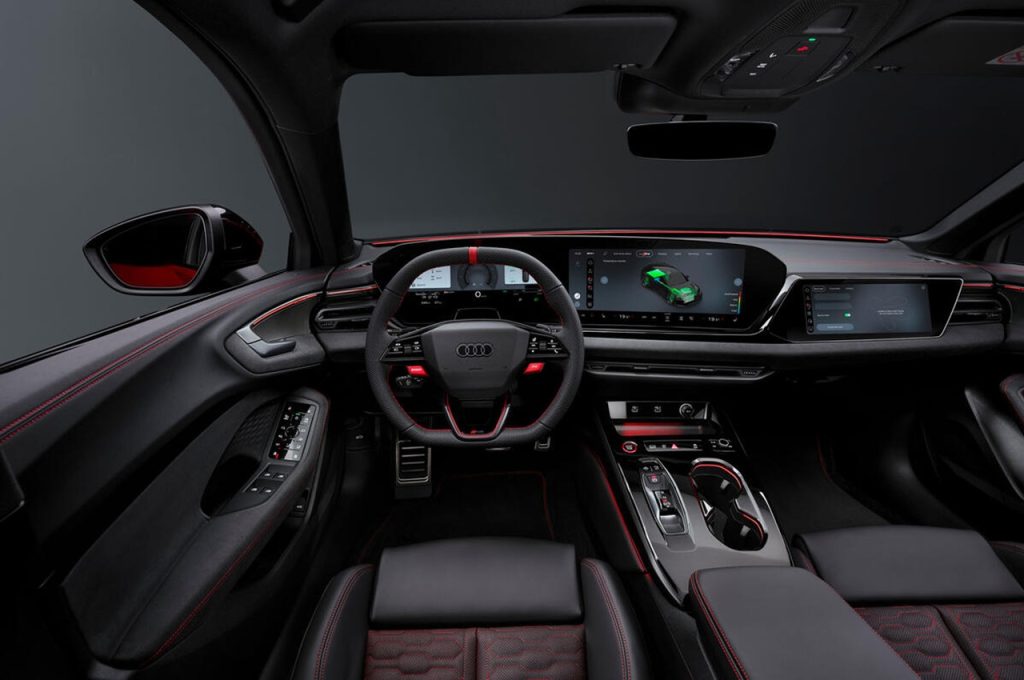
Additionally, the plug-in hybrid powertrain also allows for some 80 km of electric-only range.
You may also be interested: Mansory Turns Up the Heat on the Audi RS6 Avant, Without Going Completely Overboard
Standard stopping power comes from 420mm steel front discs and 400mm rears but for a ridiculous amount of money, you may upgrade to carbon-ceramics all-round for a 30 kg saving in unsprung weight.
One of the chief complaints with the previous RS4 was the understeer issue. The addition of an electric motor introduces a Dynamic Torque Control system that comprises an electromechanical torque vectoring rear differential.
On paper, it might not seem like a breakthrough, but it is effectively a limited-slip differential with an 11 PS motor capable of transferring 2,000 Nm of torque between the wheels in fractions of a second.
Part of the drivetrain package includes a new locking centre differential that can transfer 100% of drive to the rear wheels via the ‘RS Torque Rear’ drive mode, transforming the RS5 into a drift-ready machine.
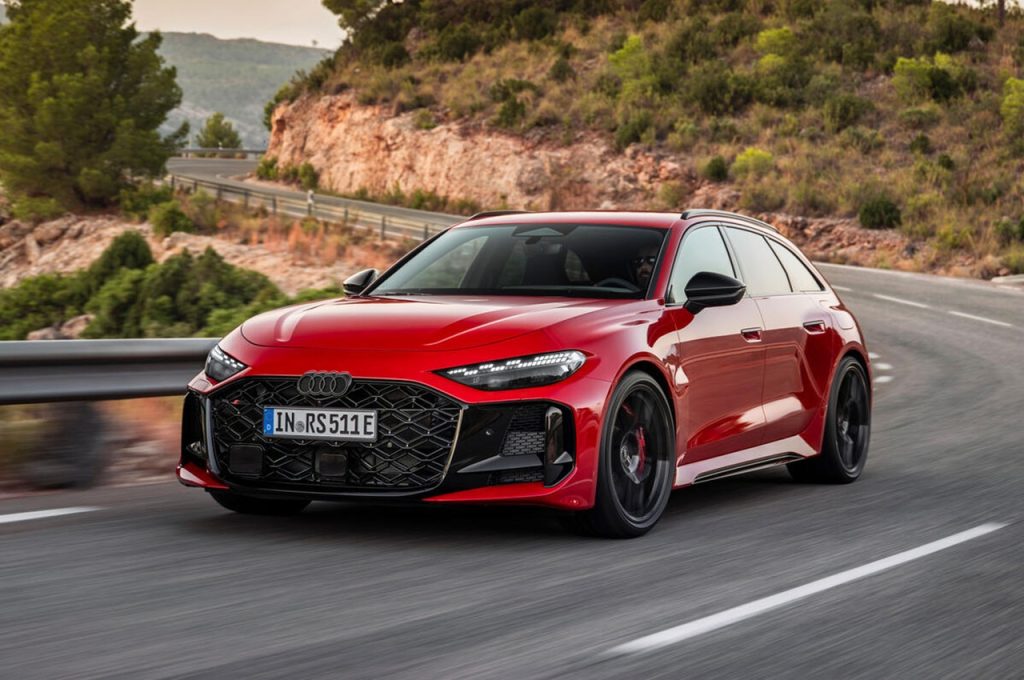
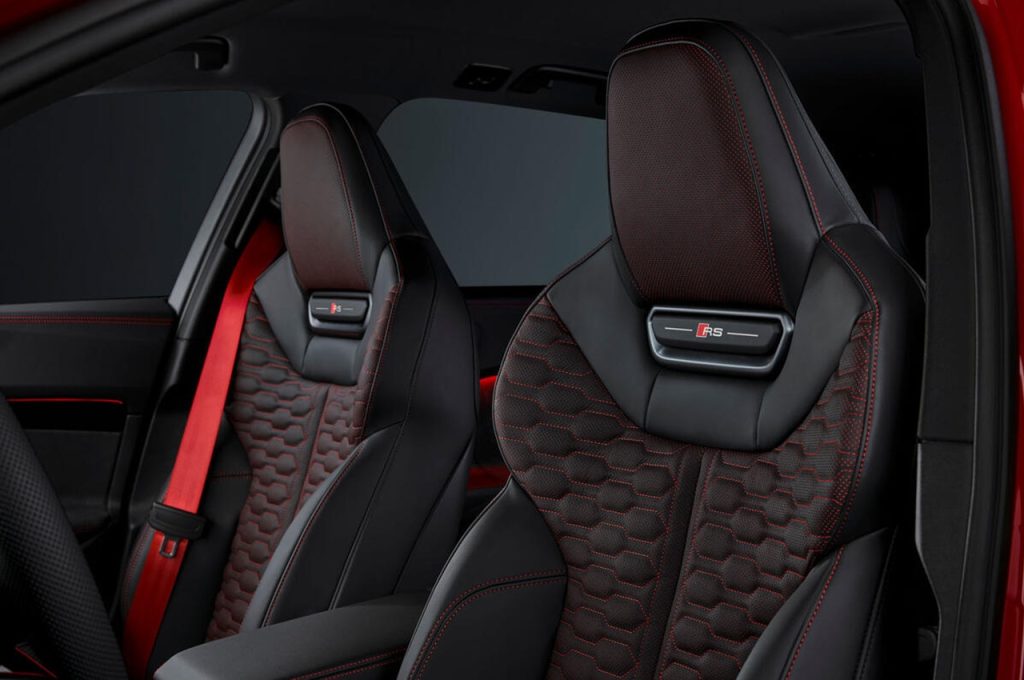
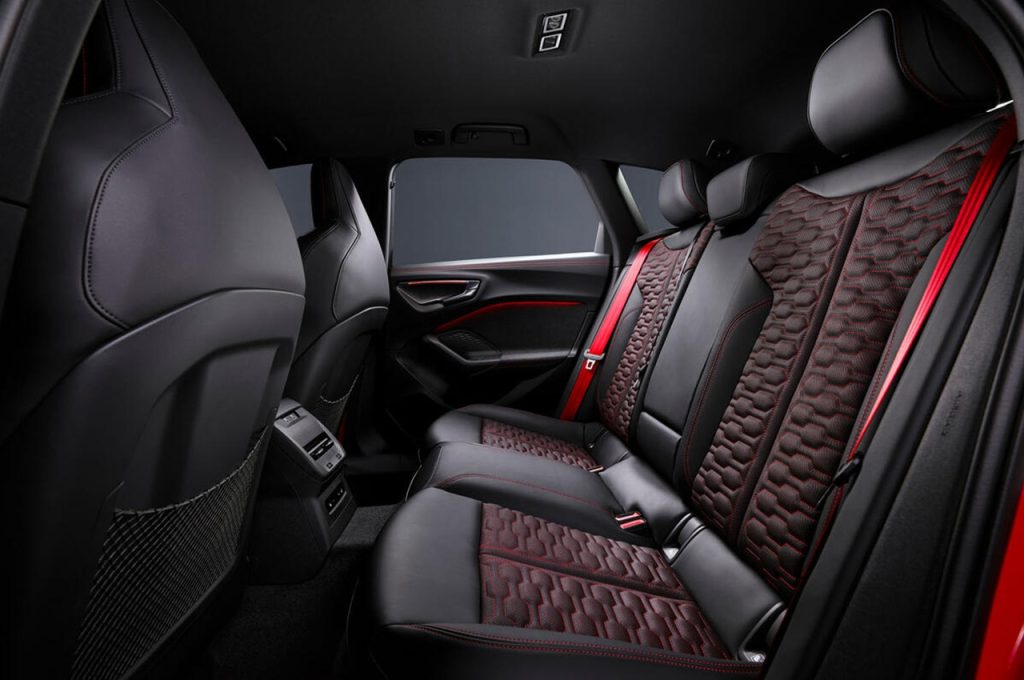
Lately, the RS models have taken on a more aggressive appearance. This is not lost with the RS5 and translates into a lower and wider stance than the standard A5, sitting on 20–21-inch alloy wheels.
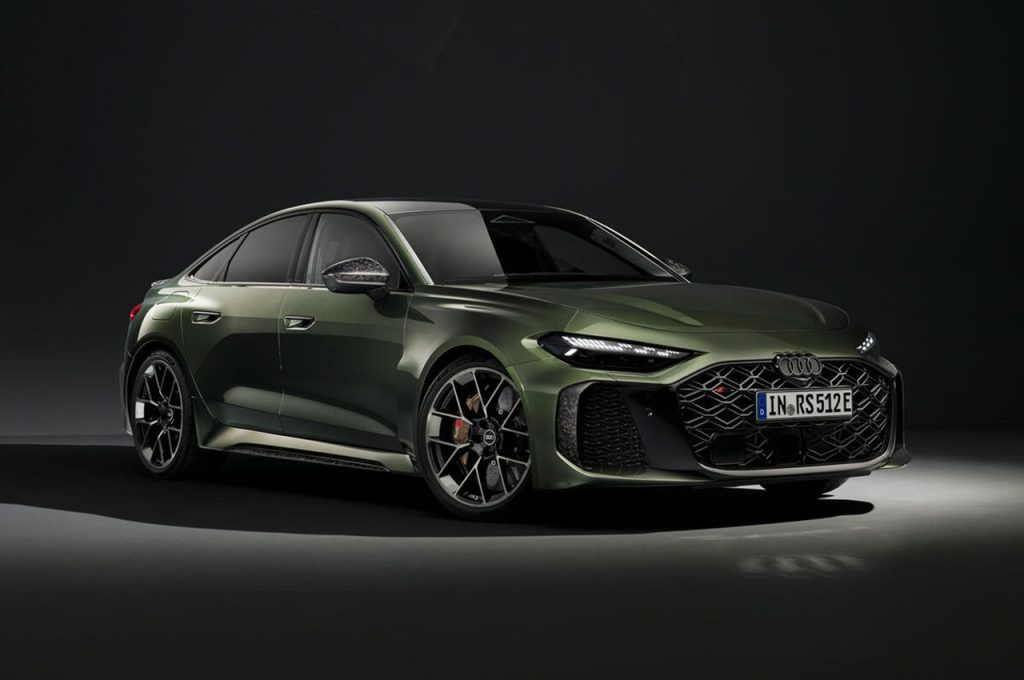
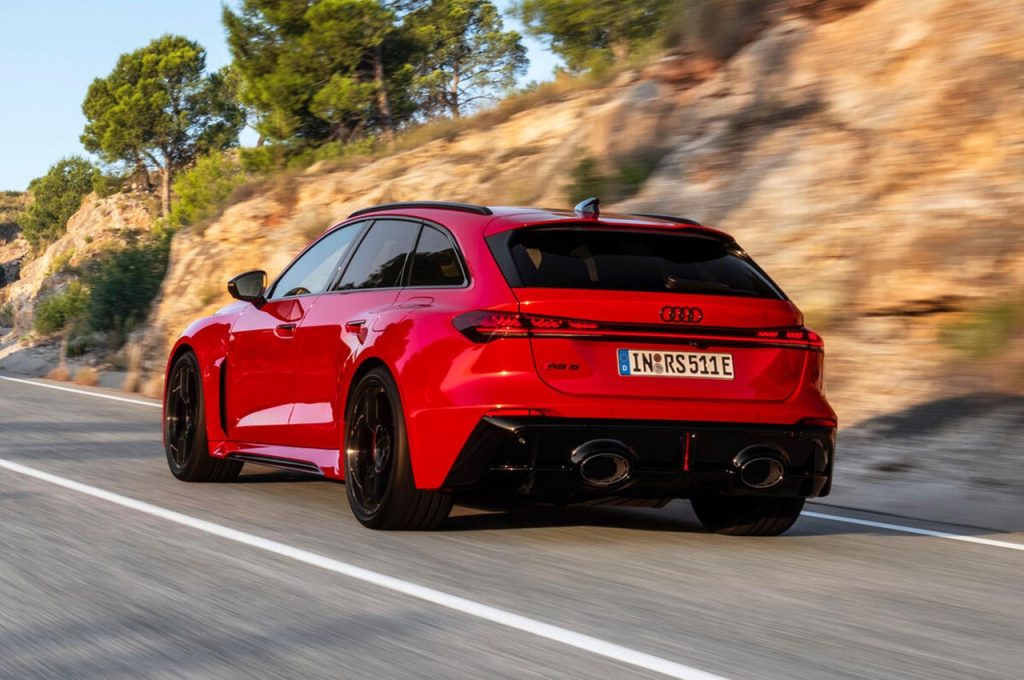
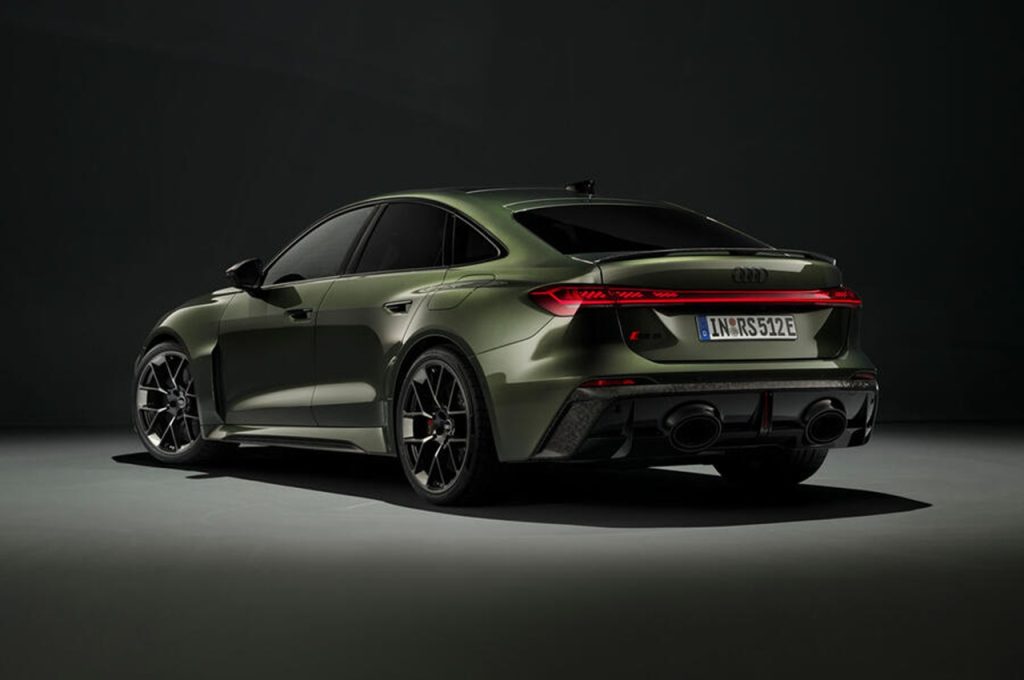
Audi are determined to differentiate the RS models and here, they have overhauled the front end. This comprises an expansive black mask grille that also maximises cooling for the V6 with the previously teased front DRLs and taillights sporting distinctive chequered-flag graphics.
One of the challenges with a PHEV model is balancing the performance between the petrol engine and electric motor. To do so here, Audi has fitted a pair of huge in-board exhaust pipes.
If you are a performance wagon aficionado, there is no better time to waste your money. The new RS5 will join the BMW M3 Touring and Mercedes-AMG C 63 S E Performance Estate.
It might not be a hark back to the glory days of killer performance wagons but we will always have a place in our hearts for something like the RS5.