
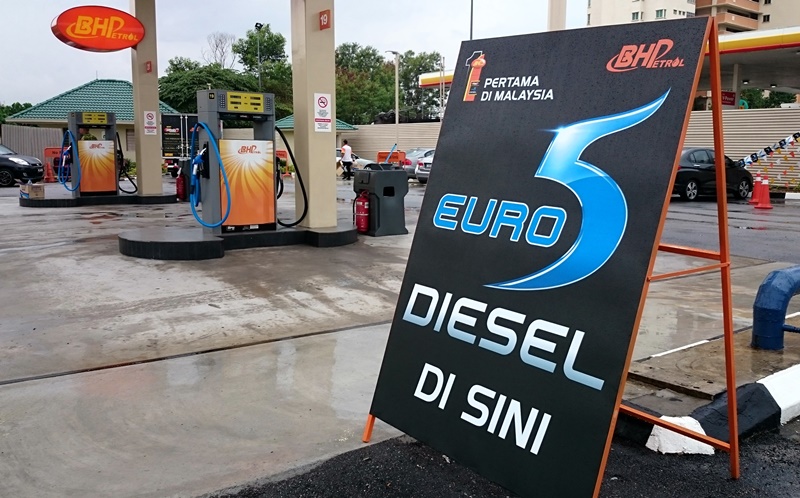
Beginning 1 June 2026, the government will grant 19 licensed plants in the country permission to start producing B15 biodiesel with a view to increase the content non fossil fuel. Malaysian deputy prime minister Datuk Seri Dr Ahmad Zahid Hamidi made the announcement in a report by Bernama. The production will begin with a B15
Beginning 1 June 2026, the government will grant 19 licensed plants in the country permission to start producing B15 biodiesel with a view to increase the content non fossil fuel.
Malaysian deputy prime minister Datuk Seri Dr Ahmad Zahid Hamidi made the announcement in a report by Bernama.
The production will begin with a B15 blend, meaning the biodiesel will have a 15% composition of rubber waste content with the remaining 85% comprising regular fossil fuel. From there, the aim is to increase the content to a B20 level with the possibility of even reaching B50 within a few years.
“This phased approach is intended to ensure that crude palm oil prices do not place pressure on biodiesel production costs,” explained Zahid, who also hold the rural and regional development minister’s portfolio.
The 19 biodiesel plants in Malaysia turn rubber waste, specifically rubber seeds and scrap rubber into biodiesel via techniques such as transesterification (for seeds) or pyrolysis (for scrap rubber). In total, the plants have a combined monthly capacity of about 1.5 million litres.
However, aside from this, the bulk of Malaysia’s current commercial biodiesel (B10, B20, B30) is primarily produced from a palm oil blend.
You may also be interested: Shell, KPD Launches Scania Road Tankers Operating on B100 Biodiesel
It remains to be seen if the current biodiesel blend of Euro 5 B10 and Euro 5 B7 will remain alongside the B15 or be phased out. At the last fuel price revision, pricing for both blends re at RM 5.12 and RM 5.32 a litre respectfully.