
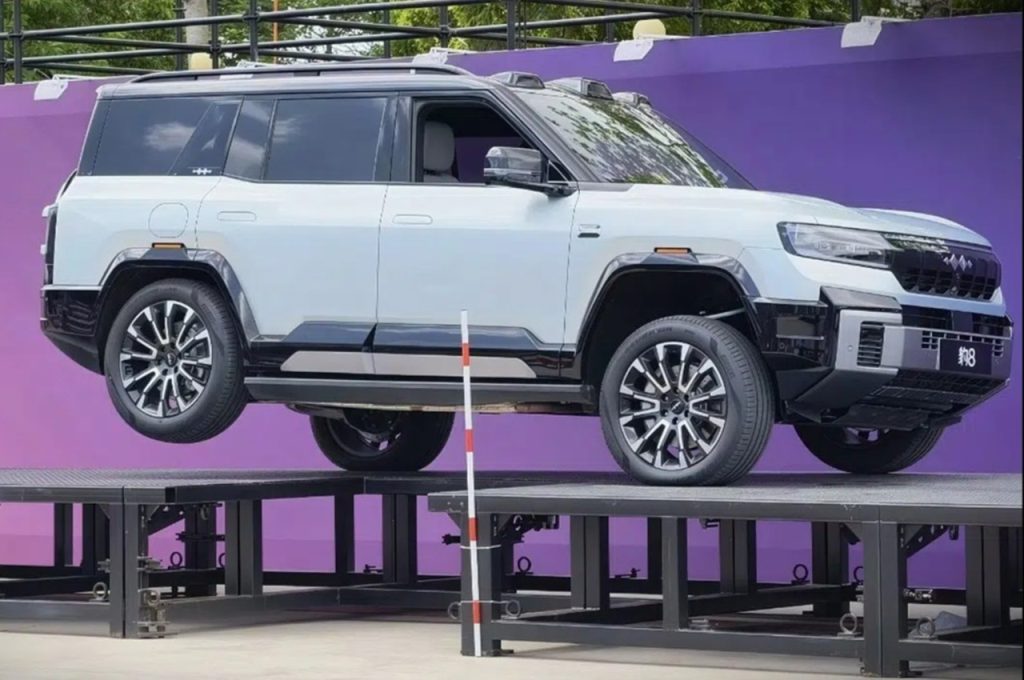
The glare of the spotlight has likely not faded from the glimmering paint of the Denza B8 following its Malaysian launch earlier today but already some trick new suspension tech has made its way into the B8 in China that gives it a three-wheel driving mode. In the rapidly evolving sphere of Chinese automotive technology,
The glare of the spotlight has likely not faded from the glimmering paint of the Denza B8 following its Malaysian launch earlier today but already some trick new suspension tech has made its way into the B8 in China that gives it a three-wheel driving mode.
In the rapidly evolving sphere of Chinese automotive technology, the latest SUVs from the likes of BYD (Denza), Huawei-backed Aito and Li Auto have demonstrated ‘three-wheel driving’ functions that sees one of the wheels lifted off the ground the car still being capable of driving, albeit at a much lower speed.
Here in Malaysia, the B8 rides on the DiSus-P damping system, the marque’s most advanced one yet. It is a hydraulically-controlled adaptive damping system with height and ride comfort adjustment.
The updated Denza in China with the tripod function is called the B8 Flash Charge Edition and is fitted with a more advanced hydraulic damping system, dubbed DiSus-P Ultra.
Here, the system demonstrated its ability to lift one wheel completely off the ground while and continue driving on three wheels at speeds up to 15 kph.
You may also be interested: Denza B8 PHEV Ladder-Frame, Three-Row SUV Launched, Priced From RM 459k
The current DiSus-P system runs single-valve dampers whereas the DiSus-P Ultra uses a dual-valve system that increases suspension travel 140 mm to 200 mm. Furthermore, the upgraded setup can be raised by up to 110 mm from its standard height and lowered by up to 90 mm.
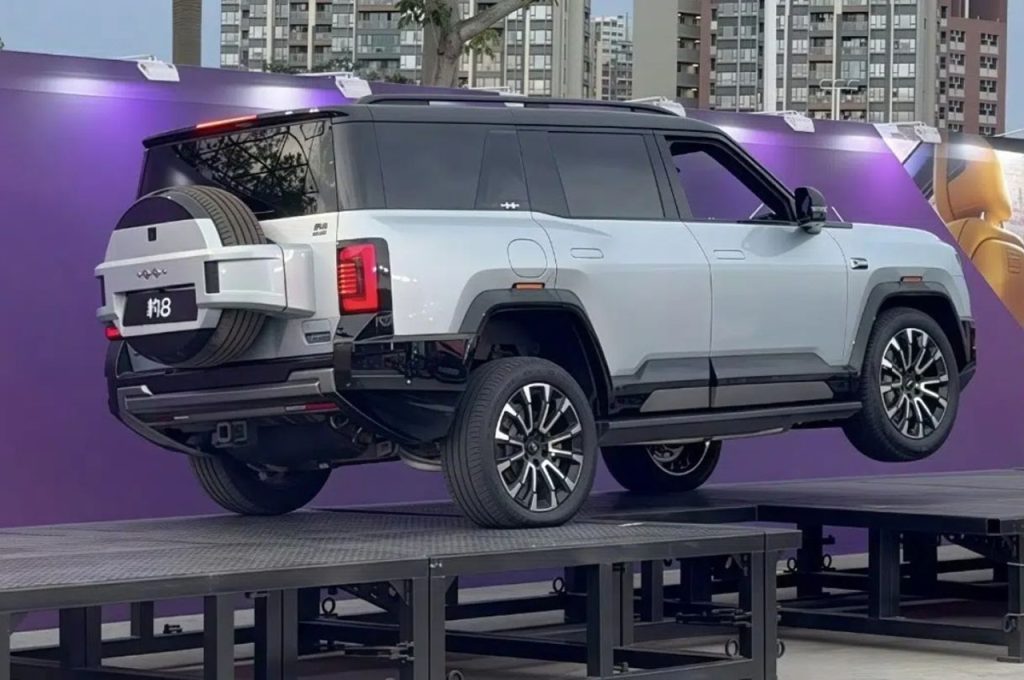
BYD claims there are three core functions or benefits to the DiSus-P Ultra system:
- wheel-lift recovery
- wheel-lift tyre replacement
- three-wheel driving
In a proper ladder-frame SUV like the B8 that allows it significant off-road capabilities, the DiSus-P Ultra system makes perfect sense.
BYD claims the system supports up to 9 tonnes of lifting force. This means in the event of the B8 becoming stuck or trapped in low-grip surfaces, the system is capable of using the suspension height adjustments to regain traction and free itself as lifting individual wheels will shift the weight balance.
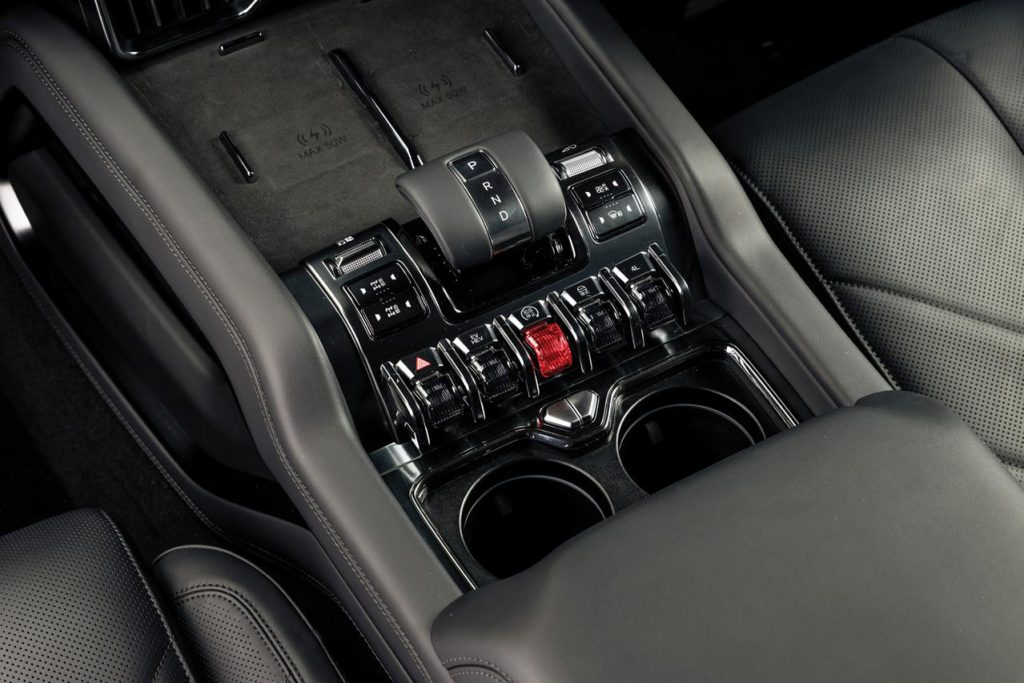
If you get a flat, replacing the wheel in an off-road condition or on soft surfaces will be draining but with DiSus-P Ultra, the system can just raise the deflated side without a jack for the spare to be fitted. BYD says the lifting process takes under a minute and the lifted wheel can remain raised for up to 24 hours.
Lastly, three-wheel driving mode will be extremely handy for low-speed emergency situations such as crossing obstacles. Lifting a wheel on uneven surfaces will help shift weight balance as well as avoid chassis contact.
Chinese automakers are increasingly turning to revolutionary new features to stand out and active suspension with trick functions are the latest one. Different manufacturers use varying technical approaches with some going the traditional hydraulic suspension systems while others are capable of directly controlling suspension movement without hydraulic fluid.
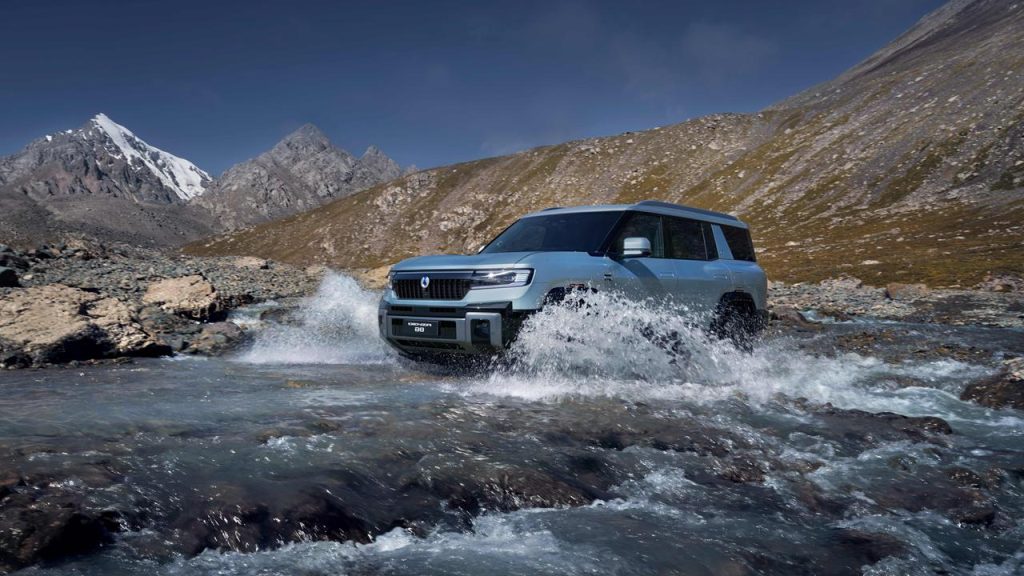
The use of advanced integrated chassis control platforms combines several systems that work together to achieve the function of lifting a wheel.
Seeing that Chinese carmakers have introduced party tricks such as the B8’s leopard turn, the DiSus-P Ultra seems like the next logical feature and would really give the brand ‘a leg up,’ or rather a wheel up, in the off-roading circle.