
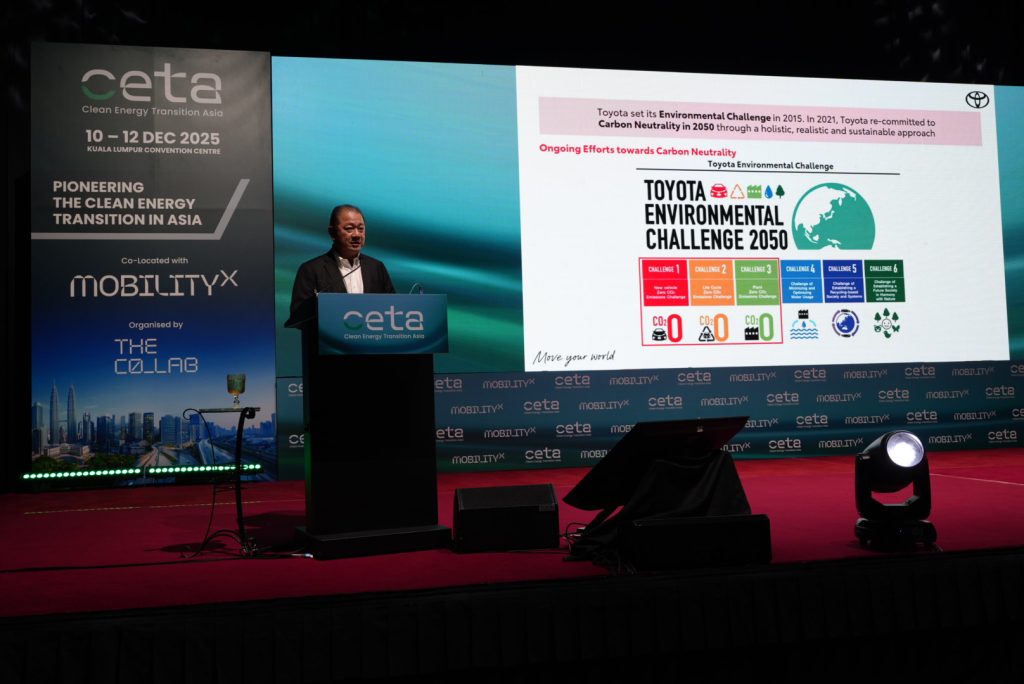
UMW Toyota Motor (UMWT) used the Clean Energy Transition Asia Summit (CETA) 2025 in Kuala Lumpur from December 10 to 12 to underline its long-standing role in supporting Malaysia’s shift towards cleaner and more accessible mobility. As a Foundation Partner of the summit through MobilityX, the company joined policymakers, industry players and regional stakeholders to
At the summit, UMWT highlighted that moving towards cleaner mobility is not just about vehicles, but about aligning policy, infrastructure, industry readiness and public acceptance. Toyota’s Multipathway approach was presented as a practical fit for Malaysia’s National Energy Transition Roadmap and the Low Carbon Mobility Blueprint, reflecting the belief that no single technology can serve every market or community. Guided by Toyota’s Global Environmental Challenge 2050, the approach recognises the diversity of mobility needs across Malaysia and the wider region.
As one of Malaysia’s longest-established mobility partners, UMWT positioned itself as having a responsibility to contribute solutions that can be adopted today while supporting long-term national goals. The company’s commitment extends beyond products to include skills development, infrastructure readiness and ecosystem building, ensuring customers are able to transition confidently towards cleaner forms of mobility in line with Toyota’s Mobility for All philosophy.
UMWT reiterated its support for a technology-neutral policy, where different powertrains play complementary roles. Energy-efficient internal combustion engines and hybrid electric vehicles continue to offer immediate carbon dioxide reductions, while battery electric vehicles are supported by investments under the NETR in charging infrastructure, renewable energy and grid upgrades. Fuel cell electric vehicles form another pillar of this strategy, alongside the Toyota Beyond Zero Malaysia initiative launched in 2024 to reinforce the brand’s long-term sustainability ambitions.
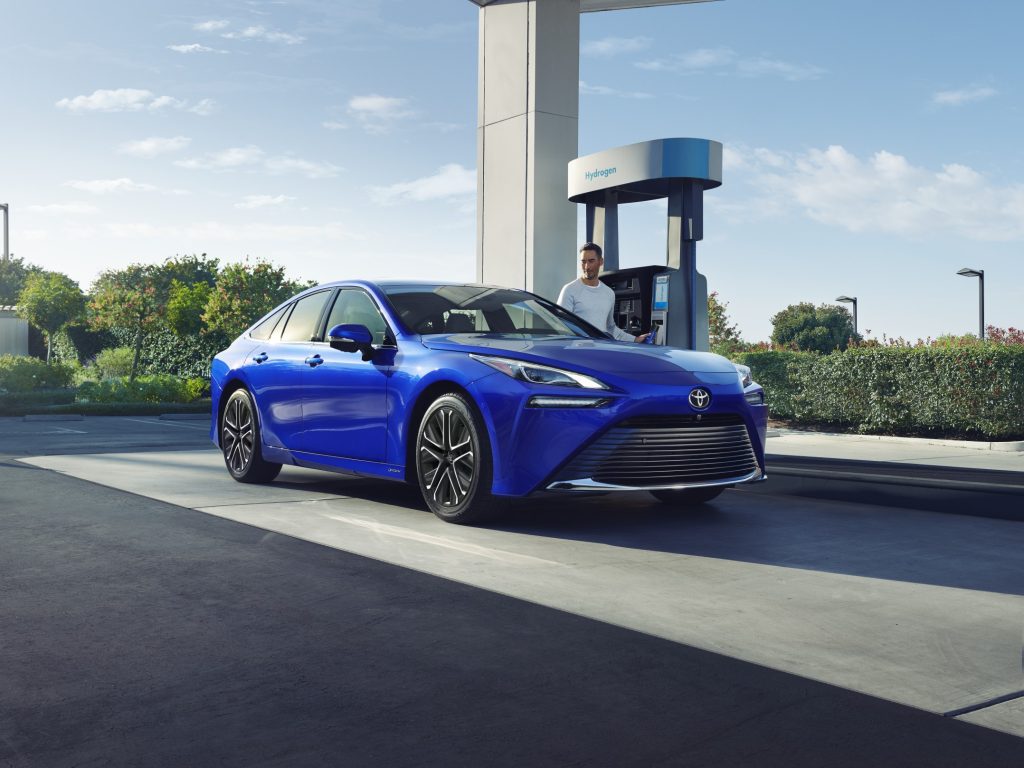
Hydrogen featured prominently in UMWT’s presentation at the summit. The company has already begun pilot projects, including the supply of Toyota Mirai fuel cell vehicles to the Sarawak Government fleet through the Sarawak Economic Development Corporation and the rollout of Malaysia’s first Mobile Hydrogen Refuelling Station pilot in Putrajaya under the Hydrogen Economy and Technology Roadmap. To date, nine Toyota hydrogen fuel cell vehicles have been deployed nationwide as part of these early initiatives.
CETA 2025 also saw the official launch of the R.A.C.E to ZERO 2026 initiative by Deputy Prime Minister YAB Datuk Amar Haji Fadillah bin Haji Yusof, who also leads the Ministry of Energy Transition and Water Transformation. The nationwide programme aims to speed up Malaysia’s net-zero journey, support clean energy projects and strengthen capabilities across the country. UMWT’s involvement at the summit highlighted how its hydrogen and Multipathway efforts align closely with these national objectives.
Beyond policy discussions, UMWT shared how it is providing selected ministries and agencies with early access to electrified vehicles to better understand real-world driving conditions in Malaysia. Representing MobilityX, UMWT Executive Director Mohd Shamsor Mohd Zain delivered a keynote on ASEAN’s mobility transition, while also joining Toyota Motor Asia’s Executive Vice President and CISO, Pras Ganesh, for a discussion on regional technology pathways and opportunities for Malaysia.
Toyota’s contribution to Malaysia’s mobility landscape stretches well beyond current initiatives. Decades of investment in local manufacturing and knowledge transfer have helped build a skilled workforce ready to support advanced mobility technologies. Collaboration remains a cornerstone of the Multipathway approach, from hydrogen demonstrations in Sarawak to refuelling pilots in Putrajaya.
Through its participation at CETA 2025, UMWT strengthened ties with government, industry and academia, reinforcing its commitment to delivering practical solutions, developing talent and supporting Malaysia’s clean-mobility ambitions while ensuring long-term competitiveness for the country and the region.