
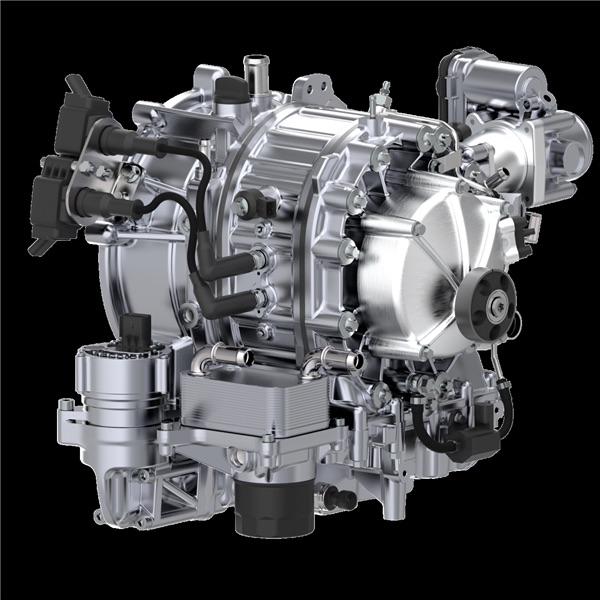
Harbin Dongan Auto Engine, a subsidiary of the Changan Automobile Group, has reached a key technical breakthrough with the successful first ignition of its R05E prototype, marking the debut of China’s first high-power rotary engine. Designed primarily for low-altitude vehicles, the new power unit is now moving into the next phase of development, with mass
The R05E project was officially initiated on April 9 and developed in collaboration with AVL, a global mobility technology specialist involved in engineering development, simulation and testing. This partnership has played a central role in accelerating the engine’s progress from concept to a functioning prototype.
At the core of the R05E is a single-rotor layout featuring a curved-edge triangular piston, paired with an independent dual-circuit ignition system. The engine also employs a lightweight eccentric shaft and balancing system, as well as an integrated water jacket designed to improve thermal efficiency and overall durability. These elements work together to deliver high output from a compact and lightweight package.
Dongan highlighted that the engine’s ultra-high power density, small physical footprint and refined noise, vibration and harshness characteristics make it suitable for a wide range of low-altitude applications. The company noted that the R05E is capable of supporting medium- to large-scale manned low-altitude vehicles, an area expected to see rapid growth in the coming years.
In terms of performance, the rotary engine is rated at 6,500 rpm and produces 53 kW of power. To further improve efficiency and reduce energy losses, the design incorporates a cast aluminium casing and NDC nanodiamond composite anti-friction coating, technologies aimed at lowering internal resistance and enhancing long-term reliability.
With the first ignition now completed, the R05E represents a significant step forward for China’s rotary engine development and underlines Dongan’s ambition to establish a foothold in emerging low-altitude mobility markets ahead of its planned production rollout later this decade.