
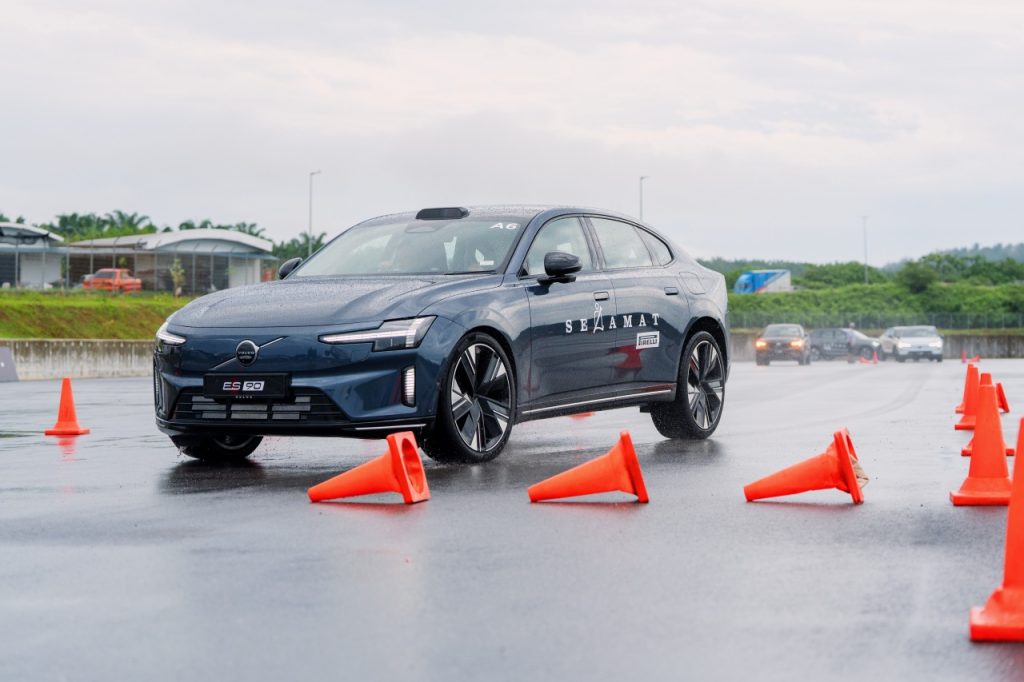
Safety these days has gone beyond airbag count, now it’s how many ADAS features, whether a car has autonomous emergency braking, lane keeping assist, blind spot monitoring, and all the usual acronyms that now fill spec sheets. The thing is, safety tech helps, but it does not replace knowing what to do when something suddenly
That was the main takeaway from Volvo Car Malaysia’s Selamat Driving Experience, held at the Sepang International Circuit Driving Experience Centre as part of its broader Selamat campaign. Yours truly was invited to take part in the programme, which focused less on selling a feature list and more on reminding drivers how quickly an ordinary drive can turn into an emergency.

The course was split into four main modules: Brake, Steer & Avoid, Emergency Lane Change, Skid Control and Handling Corners. Each one focused on a different part of vehicle control, but the underlying lesson is that emergency driving is not instinctive. It has to be understood, experienced and practised.
The Brake, Steer & Avoid module was probably the most relevant to everyday driving. It combined hard straight-line braking with an emergency lane change, simulating a situation where you have to avoid an obstacle without completely losing control of the car. It sounds simple, but the first instinct for many drivers is either to brake too little, brake too late, or steer too aggressively while the car’s weight is already shifting forward.